

Key Takeaways
- Red light therapy uses low-level red and near-infrared light, also called photobiomodulation.
- In eye care, it’s often used for dry eye and eyelid comfort, sometimes paired with intense pulsed light sessions.
- Research on the retina and early dry age-related macular degeneration is still in its early stages.
- Sessions are short and planned as a series set by the eye doctor.
- Coverage varies, so check your extended health plan before your visit.
Eye drops can ease dryness for a while, but they don’t always reach the source of the problem. If your eyes still burn or feel gritty later in the day, your optometrist may look more closely at how your eyelids and tear film are working.
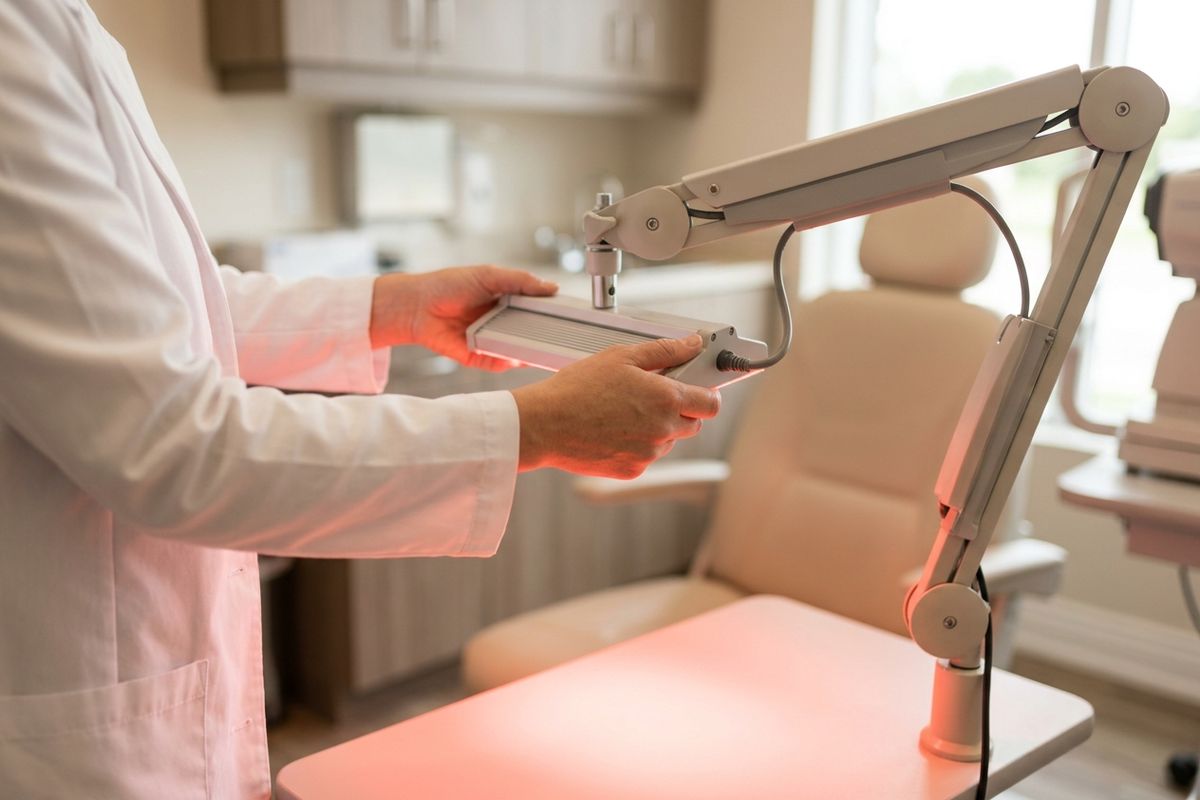
At One Vision Eyecare, red light therapy is one of the in-office options that can be part of dry eye therapy. Red light therapy for eyes delivers low-level red and near-infrared light in short in-office sessions, and it can help support the eyelids and oil glands that keep your tears from evaporating too fast.
What Red Light Therapy Is
Red light therapy uses low-level red and near-infrared light. You may also hear it called photobiomodulation, which is simply the clinical name for the same thing.
This type of light has a history outside eye care, too. Researchers have studied red light therapy for skin health and wound healing, so you may have heard of it at a skin clinic or spa.
How Red Light Therapy Is Used in Eye Care
Dry Eye and the Eyelids
Red light therapy gently warms your eyelids and may help calm inflammation along the lid margins. This can help the tiny oil glands in your eyelids release oil into your tears, which keeps them from evaporating too quickly.
Your optometrist may use red light therapy on its own or pair it with intense pulsed light (IPL) as part of a planned approach. It’s frequently paired with intense pulsed light (IPL) sessions as part of a planned approach.
Sessions don’t involve needles or drops, and you keep your eyes closed while the light is on. Expect a series of short visits. Your optometrist sets the schedule based on what your exam shows and how your eyes respond.
Research on the Retina
Red light therapy research also extends to early dry age-related macular degeneration (AMD). This condition damages the macula, the part of the retina you rely on for sharp central vision.
The findings so far are early. More human research is needed before anyone can say much with certainty, so many optometrists take a measured approach. Talk to your eye doctor so they can walk you through what’s known and what isn’t.
Red Light Compared with Laser Eye Treatment
People sometimes picture laser surgery when they hear about light and eyes. Lasers use far higher light energy. Red light therapy stays low-level and gentle by design.
What the Research Says So Far
Small studies have looked at colour contrast in adults. Those results are still debated among researchers. In a small UK study, healthy adults who looked at deep red light for 3 minutes in the morning saw better colour contrast vision for about a week.
Results varied from person to person, and larger trials are needed before the picture becomes clear. That’s worth knowing before you book, so your expectations match the evidence rather than the marketing you might see online.
Is Red Light Therapy Safe for Your Eyes?
Studies on light therapy for dry eye have reported few problems so far. In one study that combined light therapies, participants didn’t report side effects on their eyes or face.
Some people may still notice mild, short-lived effects, like:
- Warmth around the eyelids
- Brief sensitivity to bright light
- A mild headache
Home devices also differ from clinic equipment, so what you buy online isn’t the same as what’s used during a supervised session.
Dry Eye Symptoms to Mention at Your Next Exam
Small, everyday irritations can tell your optometrist a lot about your tear film. Bring up any common dry eye symptoms you’ve noticed, such as:
- Burning or stinging
- A gritty, sandy feeling
- Watery eyes
- Blurry vision that clears when you blink
- Eye fatigue that builds through the afternoon
What to Expect at a Dry Eye Consultation
A dry eye consultation includes imaging of your tear film and eyelid glands. This imaging shows your optometrist how well your glands and tears are working.
You’ll also get guidance on eye nutrition and daily habits, like how often you blink and how you set up your workspace. These small changes can affect how your eyes feel by the end of the workday.
Cost and Insurance Notes
Red light therapy is usually paid privately and typically isn’t covered by OHIP. Some extended health plans may cover part of the cost, so check your plan to see what you could be covered for.
Book a Dry Eye Consultation to Explore Red Light Therapy
If your eyes keep burning or watering by the end of the day, a dry eye consultation can help you find out what’s behind it. Our optometrists can examine your eyelids and tear film, then talk you through whether red light therapy fits your treatment plan.
Book your appointment with One Vision Eyecare in East Gwillimbury and ask whether red light therapy could be part of your dry eye care.